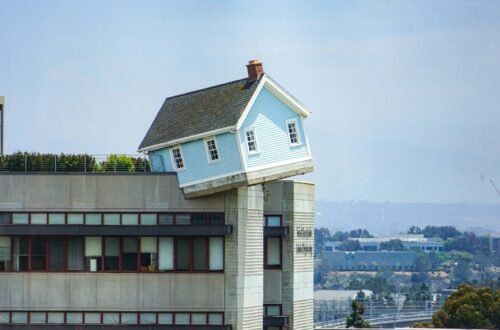
Waking thought might say, I feel trapped in my life.
A dream says: you are back in your childhood bedroom, but the door has no handle. The window opens onto a city you do not recognize. Under the bed, a fox is breathing softly, and you are unsure whether it is dangerous or waiting for you to notice it.
That is how dreams often work. They do not usually deliver clear sentences, tidy explanations, or bullet-point instructions. They create scenes. They arrange objects, animals, rooms, weather, strangers, dead relatives, broken machines, flooded houses, lost children, locked doors, collapsing bridges, and impossible landscapes.
This is why people often ask: why dreams use symbols at all. Why not simply say what they mean?
The simplest answer is that dreams use symbols because the unconscious mind does not think primarily in definitions. It thinks in images, emotional intensities, bodily sensations, memories, associations, and relational patterns. A dream symbol is not a secret code substituting one word for another. It is a living image that gathers several layers of experience into one form.
A flooded house, for example, does not merely say, “You are overwhelmed.” It may show that emotion has entered your private life, that your usual boundaries are no longer holding, that a particular “room” of the self is affected, and that your dream ego is either panicking, ignoring the water, trying to rescue something, or strangely relieved.
Plain language might name the feeling. The dream shows the situation.
Dreams Don’t Speak in Code — They Speak in Images
A common mistake in dream interpretation is treating symbols as if they belong to a fixed dictionary.
In this view:
- snake = danger
- water = emotion
- house = self
- teeth falling out = anxiety
- death = change
Sometimes these associations are useful starting points. But they become misleading when treated as final answers. Dream symbols are not codes with one correct translation. They are fields of meaning.
A code is something like “A means B.” Once you know the system, the message becomes clear.
A symbol is different. A symbol opens rather than closes. It has depth, ambiguity, emotional charge, personal history, cultural resonance, and context. A snake in a dream might carry fear, sexuality, healing, instinct, betrayal, renewal, venom, wisdom, or transformation. But the meaning depends on the dream itself: where the snake appears, what it does, how you feel, and what your own history with snakes is.
A better distinction is this:
A sign points to something fixed. A symbol gathers meaning.
A stop sign means stop. Its meaning is stable, practical, and public.
A locked door in a dream does not have that kind of fixed meaning. It may suggest exclusion, privacy, protection, secrecy, unreadiness, refusal, fear of entry, fear of escape, or the need for a key. If the dreamer is desperate to open it, the symbol carries one emotional pattern. If the dreamer is relieved that it remains locked, it carries another.
Dream language is closer to poetry, theater, myth, and body memory than ordinary speech. The image matters not only because of what it is, but because of how it behaves.
A black dog following you through an empty street is not the same as a black dog guarding your child. A house on fire is not the same as a fire warming a cold room. A dead person smiling from across a table is not the same as a dead person silently blocking a doorway.
The dream image is not a vocabulary word. It is a scene on a stage.
The Unconscious Thinks Associatively, Not Linearly
Waking consciousness usually tries to organize life into sequence:
“This happened, then I felt this, therefore I should do that.”
Dreams organize experience differently. They connect things through emotional association rather than linear explanation.
This is one reason dreams can seem strange. You may begin a dream at work, turn a corner, and suddenly find yourself in your grandmother’s kitchen. From a waking perspective, this makes no sense. Offices do not open into childhood kitchens.
But emotionally, the transition may be exact.
Perhaps your workplace has been stirring old feelings of duty, approval, criticism, caretaking, hunger, comfort, or obligation. The dream does not explain this by saying, “Your current professional life is activating an old family pattern.” It simply places the workplace and the grandmother’s kitchen in the same psychological neighborhood.
Dreams often connect people, places, and objects by felt similarity. A childhood teacher may have your boss’s voice. Your partner may briefly become your father. A friend may appear in the body of a stranger. These images are not necessarily random distortions. They may reveal emotional patterns that waking thought keeps separate.
This is also why dreams can feel irrational while remaining psychologically precise.
A dream might show you trying to give a presentation while your teeth fall out and your childhood home floods behind you. Waking logic says: impossible. Dream logic says: exposure, speech, vulnerability, family history, emotional overwhelm, and fear of being seen are all active at once.
The unconscious does not need a neat timeline. It needs an image that can hold the emotional constellation.
Symbols Can Hold More Than Plain Language Can
One of the deepest reasons why dreams are symbolic is that symbols preserve complexity.
Plain language often narrows things. It pushes experience into a single statement: “I’m anxious.” “I’m angry.” “I’m grieving.” “I feel stuck.” “I don’t trust this person.” These statements may be true, but they are often thinner than the experience itself.
A dream symbol can hold contradiction.
A mother in a dream may be your actual mother. She may also carry comfort, guilt, dependency, nourishment, engulfment, emotional inheritance, bodily memory, childhood longing, resentment, tenderness, or the larger maternal archetype. The dream may not choose one meaning because the psyche is exploring the relationship among them.
A crumbling house may contain:
- exhaustion
- fear of collapse
- neglected inner life
- family history
- body concerns
- financial stress
- old identity structures breaking down
- a need to rebuild
- the possibility of transformation
If you reduce the dream to “I’m not doing well,” something is lost. The dream may be showing where you are not doing well, what kind of collapse is happening, and whether the damaged structure is still livable, repairable, haunted, inherited, or ready to be left behind.
This is what makes dream symbolism so rich. It is not vague because it lacks meaning. It is layered because psychic life is layered.
A Symbol Is Not Less Clear — It Is Clear in a Different Way
Dream symbols can seem obscure because the waking mind expects verbal clarity. We want the dream to say, “This is about your fear of rejection,” or “You need to leave this situation,” or “You are carrying grief you have not admitted.”
But symbolic clarity works differently. It is atmospheric, emotional, spatial, and relational.
A dream of drowning may not simply mean “overwhelm.” It gives overwhelm a body. You feel depth, pressure, breathlessness, panic, helplessness, rescue, or the absence of rescue. The water may be dark, warm, freezing, shallow, oceanic, domestic, or strangely beautiful. Each detail matters.
The dream is not merely comparing one thing to another. It is creating an experience.
A black dog in a dream may not automatically “mean depression,” though that association can sometimes be relevant. Is the dog threatening or loyal? Wounded or watchful? Familiar or feral? Does it chase you, guide you, sleep beside you, or wait outside the door? Do you fear it because it is dangerous, or because it carries something you do not want to feel?
The meaning of a dream symbol lives in the relationship.
Dreams Turn Inner Conflicts Into Characters and Places
Dreams often make invisible inner dynamics visible. An emotion becomes an animal. A wound becomes a child. A boundary becomes a wall. A temptation becomes a stranger. A fear becomes a pursuer. A forbidden part of the self becomes a locked room.
This is one reason dreams use people as symbols. Dream characters may represent actual people in your life, but they can also personify parts of your psyche: shadow material, inherited scripts, instincts, undeveloped capacities, old loyalties, forbidden desires, or rejected emotions.
Instead of saying, “You are conflicted,” a dream may show:
- a child hiding in a school hallway
- a policeman blocking a road
- a lover who cannot speak
- an animal watching from the tree line
- a stranger living in your house
- a suitcase packed but hidden under the bed
- a fire burning in the kitchen while everyone pretends dinner is normal
The dream is not only representing an emotion. It is staging your relationship to that emotion.
This is why the behavior of the dream ego matters so much. The dream ego is the “you” inside the dream—the one who runs, freezes, opens the door, lies, protects the child, attacks the animal, ignores the fire, or asks the stranger a question.
If you dream of a wild horse, the question is not only, “What does the horse symbolize?” It is also:
Do you run from it? Try to tame it? Watch it with awe? Shoot it? Ride it? Feed it? Follow it into a forest?
The same symbol can point to very different psychological realities depending on how the dream ego responds.
A dream may show anger as fire, but the more revealing detail might be that you keep politely setting the table while smoke fills the room. That detail says something about your waking pattern: perhaps you maintain order while ignoring what is burning.
Symbols Bypass the Ego’s Defenses
The conscious ego is useful. It helps us function, make decisions, maintain identity, and keep life coherent.
It also edits.
It explains, justifies, rationalizes, minimizes, denies, moralizes, and avoids. It says, “I’m not angry.” “That didn’t hurt me.” “I’m over it.” “I don’t care.” “This is fine.” “I should be grateful.” “I’m not that kind of person.”
Dreams often move around these defenses by speaking symbolically.
Instead of a dream saying, “You resent your partner,” it may show:
- a sweet-looking dog biting your hand
- a wedding dress covered in mud
- a shared house with one room rotting
- a dinner where no one can swallow
- a suitcase packed but hidden under the bed
- a familiar person whose face keeps changing
The dream is not necessarily accusing you. It may be showing an emotional fact that your conscious identity cannot yet admit.
This is especially relevant in shadow work. The “shadow” is not simply the dark or bad part of the self. It includes whatever has been pushed out of conscious identity: anger, dependency, grief, ambition, sensuality, power, tenderness, envy, need, creativity, even joy.
If you identify strongly as kind, the dream may introduce cruelty. If you identify as independent, the dream may show a starving child. If you identify as rational, the dream may flood your laboratory with ocean water. If you identify as controlled, the dream may bring wild animals through the fence.
The symbol allows the psyche to approach what the ego cannot yet say plainly.
Symbolism Is Not Evasion — It Is Protection and Precision
It can be tempting to think dreams “hide” their meaning to be difficult. But symbolic dreams are not usually evasive in the shallow sense. They are indirect because directness is not always psychologically useful.
Some truths cannot be met head-on without overwhelming the dreamer. Some feelings need a container. Some memories arrive first as atmosphere, place, texture, or bodily sensation before they can become narrative.
A locked basement may be more merciful, and more accurate, than a sentence like, “You are repressing grief about your father.” The basement image lets the dreamer feel the relation to the material: it is below ordinary living space, stored, perhaps feared, perhaps necessary, perhaps not yet opened.
The question becomes: Am I ready to go down? Is there a light? Is someone with me? Is the door locked from my side or from the inside? What do I imagine is there?
Symbolism is not a failure of communication. It is often psychic diplomacy—a way of bringing difficult material near enough to be engaged, but not so bluntly that the psyche rejects it.
Dreams Use the Body’s Language Before the Mind Has Words
Not all knowing begins as thought. Much of what we call intuition, dread, longing, attraction, disgust, or unease begins as bodily registration.
The body feels constriction, heat, nausea, heaviness, restlessness, pressure, fatigue, arousal, coldness, numbness, or expansion before the verbal mind knows what to call it. Dreams often translate these bodily states into imagery.
Pressure in waking life may become being trapped underground.
Emotional flooding may become rising water in the hallway.
Digestive unease may become rotten food, spoiled milk, or swallowing stones.
Burnout may become a car with no fuel, a phone that will not charge, or a house whose lights keep flickering.
Suppressed anger may become fire, red animals, sharp teeth, explosions, knives, or a furnace hidden in the walls.
These symbols are not mechanically universal. Fire does not always mean anger. Water does not always mean emotion. A car does not always mean life direction. But bodily feeling often lends dreams their imagery, and the dream image can reveal the body’s emotional knowledge before waking language catches up.
This is part of why dreams can feel so meaningful even when they do not make literal sense. They may be emotionally accurate without being factually realistic.
A friendly coworker turning into a wolf does not necessarily mean the coworker is dangerous. It may mean that something in that relationship feels competitive, instinctual, predatory, or charged. Or it may reveal something in you that becomes wolf-like around that person: hunger, alertness, rivalry, fear, or desire.
The dream does not give a courtroom testimony. It gives the emotional truth of the body.
Jung’s View: Symbols Reveal What Consciousness Has Not Integrated
Carl Jung took dreams seriously as expressions of the unconscious, but not merely as disguised wishes or random residues. In Jungian dream interpretation, dreams often reveal parts of the psyche that consciousness has neglected, rejected, or failed to integrate.
Jung was especially interested in symbols because he saw them as more than signs. A true symbol, in his view, points toward something not yet fully known. It carries meaning that consciousness has not exhausted.
This is why Jungian work does not usually ask only, “What does this symbol mean?” It asks:
What is the unconscious trying to balance, correct, deepen, or reveal?
Dreams may bring forward shadow figures, animals, children, old women, tricksters, guides, wounded bodies, strange houses, descending stairways, oceans, forests, deaths, births, marriages, and thresholds. These can be personal images, but they may also touch archetypal patterns: descent, renewal, confrontation, initiation, sacrifice, union, exile, return.
For example, imagine a highly controlled person dreaming of wild horses breaking through a fence.
A shallow interpretation might say, “Horses mean freedom.”
That may be partly true, but a deeper reading asks:
- What instinctual vitality has been fenced off?
- Are the horses frightening, magnificent, starving, injured, or pursued?
- Is the fence protecting something, or imprisoning something?
- Does the dreamer panic, open the gate, try to repair the fence, or climb onto one of the horses?
- What kind of control is being challenged?
- What would integration look like—not chaos, but a new relationship to instinct?
The dream may not be saying, “Abandon all structure.” It may be showing that the current structure cannot contain life as it is now moving.
Dreams Often Compensate for the Conscious Attitude
One of Jung’s most useful ideas is that dreams often compensate for conscious one-sidedness.
If someone consciously insists, “I’m fine,” the dream may produce flooding, injury, collapse, getting lost, or being unable to speak.
If someone feels powerless in waking life, the dream may introduce a weapon, guide, animal ally, hidden room, unexpected strength, or a path through the forest.
If someone is overly spiritual and detached from the body, the dream may bring mud, blood, hunger, sexuality, illness, or animals.
If someone is trapped in practical concerns, the dream may open into mythic landscapes, temples, oceans, stars, or strange ceremonies—not necessarily as grand revelations, but as reminders that the psyche is larger than the daily problem.
In this sense, dreams do not always mirror waking life. Sometimes they balance it. They show the missing piece, the neglected opposite, the disowned energy, or the unrecognized capacity.
Are Dream Symbols Universal or Personal?
A thoughtful approach to dream symbolism avoids two extremes.
One extreme says dream symbols are universal: water always means emotion, snakes always mean danger, houses always mean the self.
The other extreme says dream symbols are only personal and have no broader meaning at all.
Neither view is quite enough.
Dream symbols are often both personal and archetypal, but not in the same proportion every time. Interpretation usually begins with the dreamer’s own associations, then carefully widens outward.
A snake is a good example. For one person, a snake may be connected to childhood fear, a frightening encounter, or cultural ideas of temptation and betrayal. For another, it may be associated with healing, medicine, Kundalini, transformation, sexuality, or instinctual wisdom. For someone who keeps snakes as pets, the image may carry intimacy and fascination rather than fear.
The same is true of water. An ocean dream will mean something different for a surfer, a drowning survivor, a sailor’s child, and someone who grew up landlocked and afraid of deep water. Yet water also carries broad symbolic associations across cultures: birth, cleansing, dissolution, the unconscious, emotion, danger, baptism, depth, the maternal, the unknown.
A symbol can have several layers:
- Personal layer: What does this image mean in your life?
- Emotional layer: What feeling does it carry in the dream?
- Relational layer: How do you interact with it?
- Cultural layer: What meanings has your family, religion, or culture given it?
- Archetypal layer: What ancient human pattern does it evoke?
- Dream-sequence layer: How does its meaning change as the dream unfolds?
Universal meanings should never override the dreamer’s lived relationship to the image. But personal association does not erase the symbolic depth that certain images have gathered through myth, ritual, body experience, and human history.
A tree in a dream may be the apple tree from your childhood yard. It may also carry rootedness, growth, ancestry, shelter, seasons, vertical connection between underworld and sky, and the living structure of the self.
The art is not choosing personal or universal. The art is listening for which layers are alive in this dream.
Why Dreams Don’t Just Tell You the Answer
So why do dreams use symbols instead of words?
Because dreams are not primarily instruction manuals.
They are not always trying to deliver information in the way an email, diagnosis, or advice column does. The unconscious may not “know” in sentence form. It may be working with unfinished emotional material, contradictory impulses, bodily states, memory fragments, and emerging possibilities.
Some truths are not ready to be stated plainly. Some are too complex for a single statement. Some do not transform us if they remain intellectual.
A dream could say, “You need to confront your fear.” The waking ego might agree, nod wisely, write it down, and change nothing.
But if the dream places you in a dark forest with something breathing behind you, the fear becomes experiential. Your response becomes visible. Do you run? Freeze? Turn around? Call for help? Realize the creature is wounded? Wake up before contact?
The dream is not only communicating content. It is creating an encounter.
This is why symbolic dreams can be more powerful than direct statements. They do not merely tell you that you are afraid, grieving, divided, angry, hungry, changing, or defended. They let you experience your relationship to the thing itself.
Dreams Are Less Like Messages and More Like Experiences
Many people approach dreams as if the main task is decoding: “What does this mean?”
That question matters. But it is not always the first or best question.
Sometimes a dream is asking:
- Can you stay with this feeling?
- Can you face this figure?
- Can you open this room?
- Can you stop running?
- Can you recognize this part of yourself?
- Can you grieve what you keep explaining away?
- Can you let an old identity die?
- Can you trust the animal, child, stranger, or guide?
- Can you notice what you do when help appears?
A symbolic dream is not always a message waiting to be translated. Sometimes it is an experience waiting to be metabolized.
This is one reason recurring dreams often repeat until something changes. The psyche may not be repeating because you have failed to find the correct definition. It may be repeating because the pattern is still active.
You are still running from the same figure. Still missing the train. Still unable to find the classroom. Still discovering the hidden room but refusing to enter. Still trying to drive a car from the back seat.
The dream shows the pattern until the relationship to the pattern begins to shift.
How to Read Dream Symbols Without Flattening Them
Good dream interpretation requires patience. The goal is not to pin the dream down too quickly, but to let the image reveal its range.
Start with the strongest image, not necessarily the strangest one. Sometimes the central symbol is not the dragon or the bizarre celebrity cameo, but the quiet room you kept returning to, the staircase you could not climb, or the child no one else noticed.
Then name the emotion before naming the meaning. Was the dream frightening, tender, humiliating, erotic, numbing, sacred, absurd, urgent, peaceful, or heavy? The emotional tone is often the key that opens the symbol.
Ask what the symbol does, not just what it is. A snake that bites, sheds, watches, coils peacefully, speaks, hides in a drawer, or appears in your bed is not one symbol with one meaning. Its action matters.
Notice where it appears. Dream settings are rarely neutral background. A basement, attic, kitchen, bathroom, bedroom, school, hospital, airport, train station, forest, ocean, bridge, or childhood home can shape the entire interpretation.
A fire in the kitchen differs from a fire in the bedroom. Water in the basement differs from water pouring through the ceiling. A child in a school hallway differs from a child in your current workplace.
Dream symbols are often nested: object inside room, room inside house, house inside landscape. Each layer contributes meaning.
A simple but useful dreamwork approach is to ask:
- What was the emotional weather of the dream?
- Which image still has charge after waking?
- What did the symbol make possible or impossible?
- Was it familiar, alien, seductive, threatening, wounded, sacred, decaying, alive?
- Did I move closer to it or farther away?
- Did it belong in the setting, or was it out of place?
- What part of my waking life has the same emotional shape?
- What does this image know that my waking mind keeps simplifying?
Hold several meanings before choosing one. A dream symbol often changes as you sit with it. The first interpretation may be correct but incomplete.
And be careful with dream dictionaries. They can offer associations, but they cannot know your history, your emotional tone, your cultural context, or what happened before and after the symbol appeared.
A symbol does not mean much in isolation. It means within a dream.
Examples of How Dreams Use Symbols Instead of Plain Language
The best way to understand why dreams communicate through images is to look at how much meaning a single dream scene can hold.
The Flooded House
A plain-language reduction might be: “I’m overwhelmed.”
That may be true. But the dream image is more specific.
A house often relates to inner structure, identity, family pattern, the body, or the private self. Water may carry emotion, grief, intuition, memory, or unconscious material. A flood suggests boundaries being breached or containment failing. But the details matter.
Is the water entering through the basement, the roof, the bathroom, the front door, or a child’s bedroom?
Is it clean, muddy, cold, warm, rising slowly, or rushing violently?
Are you trying to save furniture, find someone, stop the leak, swim, leave, or pretend nothing is happening?
The dream does not only say, “Too much emotion.” It asks: What part of the self is being flooded, and where is the water coming from?
A flooded childhood home may suggest old emotional material returning. A flooded office may point toward work pressure invading psychic space. A flooded bedroom may concern intimacy, rest, vulnerability, or sexuality. A flooded kitchen may involve nourishment, family dynamics, or the inability to transform raw experience into something digestible.
Plain language names overwhelm. The dream maps it.
Teeth Falling Out
A plain-language reduction might be: “I’m anxious.”
Again, possibly true. But teeth are symbolically rich. They relate to speech, appearance, aggression, confidence, nourishment, aging, sexuality, social presentation, and the ability to bite into life.
Losing teeth in a dream may involve shame, helplessness, transition, exposure, fear of being seen, fear of losing attractiveness, or inability to speak effectively. It may also connect to anger: teeth bite. If they fall out, perhaps the dreamer feels unable to defend themselves.
The setting changes everything.
Teeth falling out alone in a bathroom may emphasize privacy, shame, and bodily vulnerability. Teeth falling out while giving a speech may relate to public voice and social exposure. Teeth falling out while eating with family may suggest difficulty digesting family dynamics or saying what needs to be said at the table.
The dream may not be about anxiety in general. It may be about losing the ability to present, speak, bite, defend, or “chew” experience.
Being Chased
A plain-language reduction might be: “I’m avoiding something.”
Often, yes. But a chase dream contains more information than that.
Who or what is chasing you? A faceless man, an animal, a monster, a police officer, a child, a dead person, a former lover, a shadowy version of yourself?
Where are you running? Through a school, forest, city, hospital, childhood neighborhood, endless hallway, or unfamiliar house?
Can you hide? Does anyone help? Does the chaser get closer? Do you ever turn around?
A chase dream stages the relationship between the ego and disowned material. The chaser may be feared because it is genuinely threatening. But it may also represent an emotion, memory, instinct, desire, responsibility, or truth that gains force the longer it is avoided.
The dream does not only show fear. It shows the energetic cost of refusing contact.
Sometimes the most important moment in a recurring chase dream is the first time the dreamer turns around. Even if the figure remains frightening, the psychic pattern has changed.
A Snake in the Bed
A plain-language reduction might be: “Danger,” or “sexual energy.”
Both may be relevant, but neither is enough.
The bed is a place of intimacy, rest, sleep, vulnerability, sexuality, illness, and surrender. It is one of the most undefended spaces in the psyche. A snake may carry instinct, fear, healing, betrayal, transformation, sexuality, wisdom, venom, secrecy, or renewal.
A snake in the bed suggests that instinctual material has entered a private and vulnerable place. But the meaning depends on what happens.
Does the snake bite you? Watch you? Coil peacefully beside you? Hide under the pillow? Shed its skin? Speak? Is someone else responsible for putting it there? Are you terrified, fascinated, calm, disgusted, protective?
The question is not simply, “What does a snake mean?”
The better question is: What instinctual truth has entered the place where I am most undefended?
The Hidden Room
A plain-language reduction might be: “There is something you don’t know about yourself.”
That is often close, but hidden rooms are more nuanced.
A hidden room may represent unused psychic space, forgotten memory, unclaimed identity, secrecy, inherited material, repressed feeling, creative capacity, or a life possibility that consciousness has not yet entered.
Its condition matters.
A dusty room may suggest neglect. A beautiful room may suggest hidden capacity. A flooded room may contain emotional material. A childlike room may hold an earlier self. A forbidden room may involve shame, fear, family secrecy, or the sense that knowing has consequences. An ancient room may feel archetypal, as though the psyche has opened into something older than personal memory.
Hidden rooms often carry a surprising feeling: the sense that the self is larger than previously believed.
Not all hidden-room dreams are about repression. Some are about capacity. The psyche may be saying, “There is more space here than you knew.”
When Dreams Are More Literal Than Symbolic
Not every dream needs elaborate interpretation.
Some dreams process daily residue: recent conversations, work stress, media, errands, bodily sensations, medications, illness, or fragments of memory. If you dream of your dentist after a dentist appointment, the dream may not require a profound symbolic reading.
But even ordinary dreams can develop symbolic charge.
Dreaming of checking emails after a long workday may simply reflect mental residue. Dreaming of an inbox filling with insects suggests something more: communication has become invasive, contaminated, alive, multiplying, or impossible to manage.
A dream about missing a train after worrying about travel may be practical anxiety. But if the train is full of childhood classmates and leaves for a city you once lived in, the dream may be weaving current timing anxiety with old social patterns and earlier identity.
The distinction is not always between literal and symbolic. Many dreams are both.
A dream may process recent events while also revealing the emotional pattern beneath them. The question is not, “Is this literal or symbolic?” but, “Where is the charge?”
A mundane image with no emotional energy may be residue. An image that lingers, disturbs, fascinates, repeats, or feels strangely alive usually deserves attention.
Why Dreams Become More Symbolic During Life Transitions
Symbolic dreams often intensify during thresholds.
Grief, illness, pregnancy, breakup, trauma recovery, therapy, spiritual crisis, creative awakening, adolescence, midlife, career change, and major identity shifts can all make dreams more vivid. During these periods, the conscious self is reorganizing, and the unconscious often responds with images of death, birth, houses, bridges, oceans, animals, lost children, weddings, funerals, journeys, storms, or unfamiliar rooms.
This does not mean every intense dream is prophetic or mystical in a literal sense. It means the psyche is working with transformation.
When an old identity is no longer adequate and a new one has not yet stabilized, symbolic imagery gives shape to the in-between state. A recurring dream of searching for a lost baby, for instance, may not have one fixed meaning. Over time, the baby may represent vulnerability, responsibility, creativity, a new self, a neglected need, or something fragile that the dreamer is learning to care for.
The symbol evolves because the psyche evolves.
This is another reason dream interpretation should not be too rigid. Some symbols unfold over months or years. Their meaning is not a static label but a relationship in motion.
The Real Reason Dreams Use Symbols
Dreams use symbols because symbols can carry what plain language often cannot.
They can hold emotion before words. They can preserve contradiction. They can show bodily knowing, memory, desire, fear, shadow, grief, instinct, family inheritance, archetypal pattern, and the dreamer’s relationship to all of it.
Dreams are symbolic because the psyche is not a machine producing definitions. It is a living system trying to represent, regulate, reveal, and sometimes transform experience.
A direct statement may tell you what you already suspect.
A symbol may show you the part you have not wanted to feel.
A sentence may say, “You are exhausted.”
A dream may show you driving a car at night with no headlights, no fuel, and a sleeping child in the back seat. That image contains fatigue, responsibility, danger, lack of guidance, momentum, and the vulnerable future you are carrying. It also raises questions: Why are you still driving? Where are you going? Why has no one relieved you? What would it mean to stop?
The dream is not trying to be obscure. It is trying to be whole.
Plain language says what can be stated.
A dream symbol shows what must be encountered.
FAQ
Why do dreams use symbols instead of words?
Dreams use symbols because they arise from unconscious, emotional, associative, and image-based layers of the psyche. These layers do not always think in direct verbal explanation. They communicate through scenes, sensations, characters, places, and symbolic images that can hold complex emotional truths.
Why are dreams so symbolic?
Dreams are symbolic because the unconscious often works through association, memory, bodily feeling, and emotional pattern rather than linear logic. A symbol can gather many meanings at once, allowing the dream to express something more layered than a simple sentence could.
Are dream symbols always meaningful?
Not always in a grand or fixed way. Some dream images come from daily residue, recent memories, bodily sensations, or random fragments. But emotionally charged, vivid, or recurring dream symbols often point to meaningful inner patterns, unresolved feelings, or areas of psychological change.
Do dream symbols have universal meanings?
Some symbols have broad cultural or archetypal associations. Water, snakes, houses, children, forests, fire, death, and journeys often carry deep symbolic resonance. But personal association comes first. A symbol’s meaning depends on the dreamer, the emotional tone, and the dream context.
Why are dreams hard to understand?
Dreams are hard to understand because they follow associative and emotional logic rather than waking linear logic. They connect images by feeling, memory, symbolic resonance, and bodily experience. This can make dreams seem irrational even when they are psychologically precise.
Are dreams messages from the unconscious?
Dreams can be understood as expressions of the unconscious, but they are not always “messages” in the simple sense. Many dreams are more like experiences, dramatizations, or symbolic encounters. They may not only tell you something; they may invite you to feel, face, or integrate something.
Why do dreams show emotions as places, people, or animals?
Dreams often turn inner states into visible forms. Fear may become a pursuer, anger may become fire, grief may become water, instinct may become an animal, and neglected vulnerability may appear as a child. This allows the dreamer to interact with an inner pattern rather than merely think about it.
How do I know what a dream symbol means?
Begin with the dream’s emotional tone and context. Ask what the symbol does, where it appears, how you respond to it, and what waking-life situation has a similar emotional shape. Avoid reducing the image to a single dictionary meaning too quickly. Strong symbols often need to be approached from several angles.
Are nightmares symbolic?
Many nightmares are symbolic, especially when they involve being chased, trapped, attacked, lost, flooded, exposed, or unable to speak. They may point to fear, trauma, conflict, avoidance, overwhelm, or shadow material. However, nightmares connected to trauma should be approached gently and, when needed, with professional support.
What is the difference between a literal dream and a symbolic dream?
A literal dream may process recent events, practical concerns, or bodily sensations. A symbolic dream carries emotional charge beyond the surface event. Many dreams are both. For example, dreaming about work after a stressful week may be literal residue, but dreaming of your inbox filling with insects suggests symbolic meaning around communication, invasion, contamination, or overwhelm.