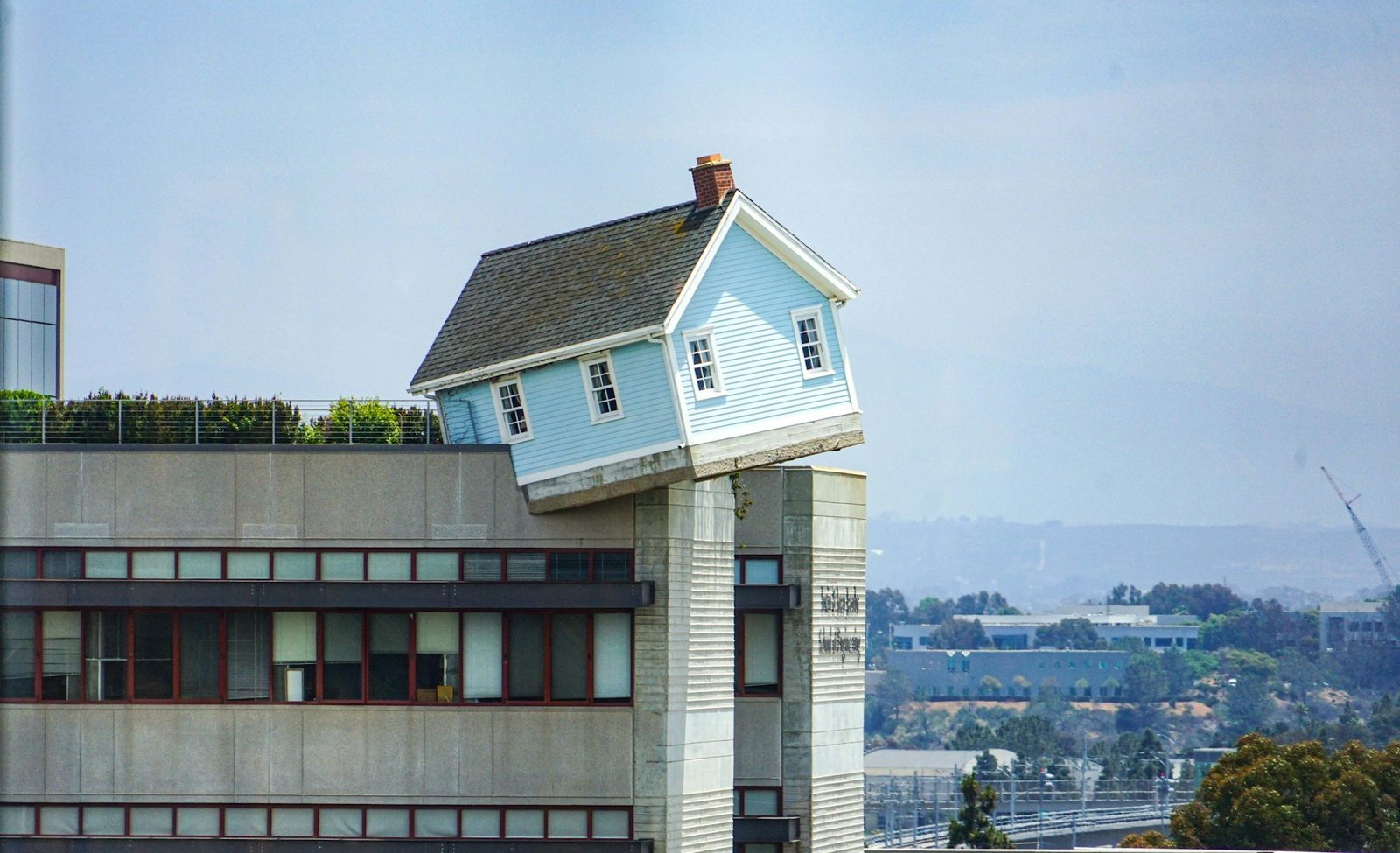
Dreaming of a house you’ve never seen before can feel strangely different from other dreams, mostly because the place often has a kind of emotional logic to it. You may wake up knowing, with ordinary waking certainty, that you have never been there in real life, and yet inside the dream you may have moved through it as if it belonged to you, as if some part of you knew where the hallway turned, which staircase led upward, or that there was another room behind the wall.
That is what makes an unknown house dream so compelling. It is not only unfamiliar. It is intimate and unfamiliar at the same time.
In dream symbolism, a house often represents the self: your mind, your body, your emotional life, your history, your private identity, and the different rooms of experience you live inside. But when you dream of a house you’ve never been to, the meaning becomes more interesting than the usual “house equals you” explanation. An unknown house may point to a part of yourself that is real, active, and emotionally important, but not yet fully recognized by your conscious identity.
In other words, the dream may not be showing you who you already think you are.
It may be showing you the self beyond the self-image.
A house you’ve never seen before can symbolize hidden emotions, forgotten parts of the past, a new life phase, unlived potential, spiritual transition, or shadow material that has not yet found a clear place in your waking life. The house gives shape to something that would otherwise remain vague. It turns emotion into architecture. It gives your inner life walls, doors, staircases, bedrooms, attics, basements, windows, and sometimes secret rooms.
And that is where the real meaning begins.
What Does It Mean to Dream of a House You’ve Never Seen Before?
Dreaming of a house you’ve never seen before often means you are entering unfamiliar psychological territory. This may be connected to a change in your identity, a hidden part of your personality, unresolved emotional material, or a new version of yourself that has not fully arrived yet.
The house is not always “about the future,” and it is not always “about the past.” It can be either, but often it belongs to a stranger category: the inner life that exists before you have language for it.
You may be changing in ways you have not admitted yet. You may be carrying emotions that have not been sorted into neat categories. You may be revisiting a part of yourself that was once sealed off, neglected, or quietly abandoned. Or you may be approaching a threshold, where your old identity no longer feels large enough, but the new one has not yet become familiar.
This is why the dream may feel so vivid. The house is not just scenery. It is a structure.
It may represent:
- Your inner world, especially parts you do not normally examine
- A new phase of life, where you are becoming someone slightly unfamiliar to yourself
- Hidden memories or emotional patterns that are asking for attention
- Shadow material, meaning traits, desires, fears, or wounds you have pushed away
- Unlived potential, especially if the house has rooms you did not expect
- Spiritual or psychological expansion, particularly if the house feels larger inside than outside
Still, the meaning depends heavily on the details. A warm, beautiful house with many bright rooms does not carry the same message as a dark, collapsing house with locked doors and a flooded basement. The dream is not only asking, “What is the house?” It is asking, what kind of place is your inner life right now?
Why the Unknown House Feels Familiar
One of the most fascinating versions of this dream is when the house is clearly unfamiliar, but somehow feels known. You may wake up thinking, “I’ve never seen that house before, so why did it feel like mine?”
That strange familiarity is important.
Sometimes the mind builds dream settings from fragments of memory: a hallway from one place, a window from another, a staircase from childhood, a room you once saw in a film, a mood from an old family home. But symbolically, the familiarity may come from something deeper than visual memory.
The house may be unfamiliar to memory, but familiar to emotion.
For instance, a person might dream of a large old house with too many bedrooms, even though they have never lived anywhere like that. On the surface, the house is invented. But emotionally, it may feel exactly like their family system: too many closed doors, too many rooms where people went silent, too much history no one explained. Another person might dream of a clean, sunlit house with a garden and wide windows, and although they have never been there, the feeling may match a future self they are slowly growing toward: calmer, less defensive, more open to being seen.
So the question is not always, “Where did this house come from?”
A better question might be: what feeling in my life does this house know about?
Because the dream may not be reproducing a place. It may be reproducing an emotional architecture.
The House as a Map of the Hidden Self
In Jungian dream interpretation, houses are often understood as images of the psyche. This does not mean every dream house has one fixed meaning, or that every attic, basement, or bedroom should be interpreted by a rigid dictionary. It means the house gives form to the dreamer’s inner structure.
You might think of the house as a map of the self, but not the polished self you present in conversation, work, relationships, or social media. More often, it is the layered self: the part that has old rooms, locked rooms, unfinished rooms, neglected rooms, and rooms you did not know existed.
That is why dreaming of a house you’ve never seen before can be so powerful. It can reveal that your identity is not as simple as your usual story about yourself.
You may say, “I am practical.”
Then you dream of a house with a hidden music room.
You may say, “I am over it.”
Then you dream of a basement full of old furniture, damp walls, and boxes that have not been opened.
You may say, “I don’t need much.”
Then you dream of a mansion with a beautiful library, a warm kitchen, and a bedroom that feels like it was waiting for you.
The unconscious often speaks in images before the conscious mind can make a reasonable sentence. The house appears because the thing inside you needs a place to exist.
This is one of the most useful ways to understand the dream: a room may be a part of you that has not been given permission to live openly yet.
Not every room is a “talent.” Not every room is a wound. Some rooms are needs. Some are griefs. Some are instincts. Some are memories. Some are versions of yourself that were interrupted before they could become a life.
The Rooms Matter: What Each Part of the Unknown House May Reveal
When interpreting an unknown house dream, pay attention to which room stood out. Often the room is more specific than the house itself. The house gives the overall structure, but the room gives the emotional subject.
Dreaming of a Bedroom in an Unknown House
A bedroom in a dream often points to intimacy, rest, vulnerability, privacy, sexuality, or the part of you that exists when no one is watching. If you dream of a bedroom in a house you’ve never seen before, the dream may be asking you to look at a private area of your life that does not yet feel fully familiar.
This could involve romantic intimacy, but not always. It may also point to your relationship with rest, softness, personal boundaries, or the right to have a private self.
If the bedroom is beautiful and peaceful, it may suggest a growing need for deeper emotional safety. If it is messy, exposed, or invaded by strangers, the dream may point to a lack of privacy or a feeling that your most vulnerable self is not protected. If the bedroom is locked, you may be approaching material around intimacy that still feels too sensitive to enter directly.
A bedroom is not just about sleep or romance. It is often about the part of life where performance ends.
So if the bedroom in the unknown house feels important, ask yourself: what part of me only appears when I do not have to be impressive, useful, controlled, or understood?
Dreaming of a Kitchen in an Unknown House
A kitchen usually relates to nourishment, transformation, appetite, family patterns, and the way raw material becomes something livable. In waking life, a kitchen is where things are prepared, combined, heated, cut, shared, stored, or thrown away. Symbolically, it often has to do with what you are taking in and how you are processing it.
In an unknown house dream, a kitchen may reveal a new relationship with care. Perhaps you are learning to feed yourself emotionally rather than waiting for others to do it. Perhaps you are noticing how much of your life has been shaped by family habits around giving, receiving, eating, scarcity, hospitality, or obligation.
If the kitchen is warm and active, there may be something in you that wants to return to life, appetite, creativity, or domestic grounding. If the kitchen is empty, dirty, or unusable, the dream may point to depletion. You may be trying to live from a part of yourself that has not been nourished for a long time.
The kitchen asks a very plain but serious question: what are you trying to live on?
Dreaming of a Bathroom in an Unknown House
Bathrooms in dreams are often connected to release, cleansing, shame, privacy, and the need to let something pass out of the system. They are not always glamorous symbols, but they are often emotionally honest ones.
A bathroom in a house you do not recognize may suggest that you are trying to release something in a part of life where you do not yet feel safe or oriented. This could be grief, resentment, old embarrassment, emotional exhaustion, or a pattern you have carried for too long.
If the bathroom has no door, the dream may involve vulnerability, exposure, or fear of being seen in a process that should be private. If the toilet is broken or overflowing, there may be emotional material you are trying to get rid of, but it is not moving cleanly through your life. If the bathroom is clean, bright, and peaceful, it may suggest that some kind of emotional clearing is becoming possible.
A bathroom dream is rarely “just weird.” It often asks: what needs to leave, and why do I feel ashamed of needing release?
Dreaming of an Attic in an Unknown House
An attic often symbolizes memory, old ideas, inherited beliefs, imagination, and things that have been stored above ordinary awareness. It can feel dusty, strange, nostalgic, sacred, or eerie, depending on what is kept there.
In an unknown house, an attic may represent a higher but older layer of the self. These may be thoughts you once had and abandoned, creative interests you packed away, family beliefs you inherited without questioning, or spiritual questions that have been quietly waiting for you to look upward again.
The attic can also point to perspective. It is above the main living area, which means it may hold a view of your life that is not available from the ground floor of daily routine.
If you find objects in the attic, pay attention to them. Old clothes, photographs, books, toys, mirrors, boxes, or furniture each add a different layer of meaning. An attic full of forgotten things may ask what parts of your life have been preserved but not integrated.
The attic asks: what have I stored away because there was no room for it in the life I was trying to build?
Dreaming of a Basement in an Unknown House
The basement is one of the strongest dream symbols in house dreams because it often connects to the unconscious, the body, the shadow, fear, instinct, family secrets, grief, or emotional material stored below ordinary awareness.
A basement in a house you’ve never seen before may suggest that you are approaching a deeper layer of yourself, especially one that does not fit your conscious self-image. This does not automatically mean something terrible is hidden there. It means something has been kept below the main level of life.
The basement may hold anger you learned to call “overreacting.” It may hold sadness you intellectualized instead of feeling. It may hold instincts you distrusted, desires you judged, or truths about your family that everyone behaved around but no one named.
If the basement is flooded, the dream may point to emotion that has risen beyond containment. If it is dark, you may not yet feel ready to see what is there. If there is a creature, stranger, or locked object in the basement, the dream may be personifying a disowned part of the self.
The basement asks: what has been living underneath the life I show people?
Dreaming of Hallways, Staircases, and Doors
Hallways and staircases are transitional symbols. They are not usually the destination. They are the movement between one state and another.
A hallway in an unknown house may suggest uncertainty, waiting, transition, or the feeling of moving through a part of life where the final room has not appeared yet. A long hallway may suggest delay or avoidance. A hallway with many doors may suggest options, secrecy, or inner complexity.
Staircases often suggest movement between levels of awareness. Going upstairs may indicate perspective, thought, aspiration, or spiritual distance from the ordinary. Going downstairs may indicate descent into emotion, memory, instinct, or shadow. Neither direction is automatically better. Sometimes you need to go up to understand. Sometimes you need to go down to become honest.
Doors are thresholds. A closed door may mean protection, fear, timing, shame, or the fact that something is not yet ready to be entered. A locked door does not always mean you are blocked. Sometimes it means the psyche is respecting its own pace.
That matters, because in modern self-development culture, we often talk as if every hidden thing must be immediately accessed, healed, exposed, and optimized. Dreams are usually wiser than that. A locked door may say: not yet, not this way, not without preparation.
Hidden Rooms in Dreams: The Self You Haven’t Made Space For
Dreaming of hidden rooms in a house you’ve never seen before is one of the most meaningful unknown house dream scenarios. The hidden room often represents something within you that exists, but has not been included in your ordinary identity.
This could be a talent, but it does not have to be. It could also be an emotional truth, a private desire, an old grief, a need for solitude, a spiritual hunger, a more serious ambition, or a part of your personality that was discouraged earlier in life.
A hidden room is especially interesting because it changes the size of the house.
You thought the house was one thing. Then it became larger.
That is often what happens psychologically when we discover something true about ourselves. The old identity does not necessarily disappear, but it becomes too small. There is more space than we realized. More complexity. More history. More possibility. Sometimes more pain.
A hidden room can feel exciting because it suggests expansion. But it can also feel unsettling because expansion often demands change. If you find a secret library, a studio, a nursery, a chapel, a locked bedroom, or an underground room, the dream may be asking what part of you has been waiting for a door to appear.
The most useful question is not only, “What does the hidden room mean?”
Ask: what would change in my life if this room were allowed to exist?
That question usually goes deeper.
A person who dreams of a hidden art studio may not simply be “creative.” They may have built an entire adult identity around being sensible, productive, and undemanding, while a more expressive self has been living behind the wall. A person who dreams of a hidden nursery may not simply “want children.” They may be encountering vulnerability, care, innocence, regret, or the part of themselves that needed tenderness and did not receive it. A person who dreams of a hidden chapel may not need to become religious. They may need to admit that efficiency has not answered their spiritual loneliness.
The room is the symbol. But the permission is the point.
Dreaming of a House With Many Rooms or Endless Rooms
If you dream of a house with many rooms, or a house that seems to go on forever, the dream may suggest that your inner life is larger than your current sense of self. This can be inspiring, but it can also feel overwhelming.
An endless house may appear when the psyche is trying to show complexity. There are more layers, more memories, more emotions, more possibilities, or more unresolved questions than your waking mind has been able to organize. You may feel curious and excited as you explore. Or you may feel lost, trapped, and unable to find the exit.
The emotional tone is everything.
If the endless house feels beautiful, fascinating, or full of discovery, it may symbolize expansion. You may be entering a period where your life opens in directions you did not expect. Perhaps you are discovering new interests, new ambitions, new emotional capacities, or new spiritual questions.
If the endless house feels confusing, dark, or claustrophobic, it may symbolize overwhelm. You may be inside too many expectations, too many inherited patterns, too many roles, or too many unfinished emotional rooms.
This kind of dream often appears when the simple story you tell about yourself is no longer enough.
You may have thought, “I am just this kind of person.”
Then the dream shows you a house with forty rooms.
The psyche is not always subtle.
Recurring Dreams About the Same Unknown House
A recurring dream about the same unknown house deserves attention, especially if the house appears over months or years. The repetition suggests that the dream house has become a stable inner landscape. It may represent an ongoing emotional pattern, a long-term transformation, or a part of yourself that keeps returning because it has not yet been fully understood.
The important thing is to track what changes.
Many people focus on the fact that the house repeats, but the differences between the dreams may be more revealing than the repetition itself. Perhaps a room that was locked is now open. Perhaps the basement is less frightening. Perhaps the house is brighter than before. Perhaps someone new appears. Perhaps you finally go upstairs. Perhaps you stop trying to escape and begin exploring.
These changes may reflect movement in your waking life.
A recurring unknown house may be connected to therapy, grief, spiritual development, creative awakening, family patterns, relationship changes, or a period of identity reconstruction. It may also appear during times when you are leaving one version of life behind but have not yet settled into the next.
Ask yourself:
- What part of the house do I usually avoid?
- Do I feel like an owner, a guest, a child, a trespasser, or an explorer?
- Has the atmosphere changed over time?
- Is the house becoming more accessible or more threatening?
- What room keeps appearing, and what might that room represent in my life?
A recurring house dream is rarely solved by one interpretation. It is more like an ongoing conversation. The house returns because some part of you is still walking through it.
Dreaming of an Abandoned, Haunted, or Dark Unknown House
Not every unknown house dream feels expansive or mysterious in a pleasant way. Sometimes the house is abandoned, decaying, haunted, dark, damp, or unsafe. These dreams can be unsettling, but they are not necessarily “bad omens.” More often, they point to parts of the inner life that feel neglected, unresolved, or difficult to inhabit.
An abandoned unknown house may suggest a part of yourself that has been left behind. This could be a dream, a talent, a grief, a memory, a relationship to the body, or a more authentic way of being that was once alive but did not receive care.
A haunted house may symbolize an unresolved emotional presence. Something remains in the house. This might be shame, grief, fear, family history, trauma, guilt, longing, or an old relationship pattern. The “ghost” in the dream may not be literal. It may be an image of what still affects you even though you try to live as if it is gone.
A dark house may suggest uncertainty or avoidance. You may be inside a part of yourself that has not yet been illuminated by awareness. Darkness can be frightening, but it can also be protective. Not all unconscious material is ready to become conscious at once.
A decaying house may suggest that an old structure of identity is no longer supporting you. Perhaps you are trying to live inside beliefs, roles, defenses, or habits that once protected you but are now falling apart.
The key is not to panic. A difficult house dream does not mean something is wrong with you. It may mean that your psyche is showing you where attention is needed.
The dream is not saying, “This is who you are forever.”
It may be saying, this is the room that has not been tended.
Dreaming of Moving Into a House You’ve Never Seen Before
Dreaming of moving into an unknown house often points to transition. You may be entering a new life stage, a new identity, a new relationship pattern, or a new emotional reality.
The meaning depends on how you feel about moving in.
If the dream feels exciting, the unknown house may represent readiness. You may be more prepared for change than your waking mind realizes. If the dream feels anxious, the house may represent a new responsibility, relationship, or phase of life that feels unfamiliar. If the house feels too large, you may be confronting a larger life than the one you feel qualified to inhabit. If it feels too small, you may be trying to fit yourself into a future that does not have enough room for who you are becoming.
This dream can be especially common during periods of major change: moving, changing careers, ending or beginning relationships, becoming a parent, leaving a belief system, starting therapy, grieving, or beginning a more independent life.
But sometimes the change is quieter. You may not be moving externally at all. You may simply be moving into a new relationship with yourself.
That can be just as significant.
Spiritual Meaning of Dreaming of a House You’ve Never Seen Before
Spiritually, dreaming of a house you’ve never seen before may symbolize the soul, the hidden self, a threshold of transformation, or an inner sanctuary you are beginning to discover. Some people experience these dreams as unusually vivid, almost as if they have visited a real place on another level of consciousness. Others wonder if the house is connected to a past life, ancestral memory, or a future home.
A grounded interpretation does not have to dismiss those feelings, but it also does not need to rush into certainty.
The most useful spiritual approach is to treat the house as meaningful without forcing it to be literal.
An unknown house may be spiritual because it shows you that the self is larger than the everyday personality. There are rooms within you that are not visible from the surface of ordinary life. There are doors that open only when you are ready. There are lower rooms that hold old pain, upper rooms that hold perspective, and hidden rooms that hold parts of your soul you may have mistaken for impractical, childish, shameful, or impossible.
In this sense, the dream house may be less about prediction and more about initiation.
It brings you into contact with a part of yourself you cannot continue to ignore. It says: there is more here. There is another room. There is a staircase you have not taken. There is a locked door, and whether or not you open it now, you know it exists.
That knowing can change something.
Is the Unknown House a Real Place?
Sometimes people wake from an unknown house dream with the feeling that the place was real. They may wonder whether they saw a future home, a past-life location, a forgotten childhood place, or a real building they will someday find.
It is possible for dreams to include fragments of real places you saw briefly and forgot. It is also possible for the dreaming mind to create a place so coherent that it feels real. The emotional intensity of the dream can make the house seem less like a symbol and more like a destination.
But from an interpretive point of view, the more reliable question is not, “Is this house real?”
The better question is: what is real in me that this house is giving form to?
Because even if the house is not a literal place, the feeling is real. The fear is real. The curiosity is real. The nostalgia is real. The longing is real. The sense of discovery is real.
Dreams do not need to be literal to be truthful.
An unknown house can be “real” in the sense that it accurately portrays something about your inner life. It may show you where you feel trapped, where you are expanding, where you are hiding, where you are neglected, or where you are becoming more whole.
Common Unknown House Dream Scenarios
Dreaming of Exploring an Unknown House
Exploring an unknown house often suggests self-discovery. You may be moving through unfamiliar parts of your identity, emotions, or life path. If you feel curious, the dream may point to openness and readiness. If you feel afraid, it may suggest that some part of the self feels too unfamiliar to approach easily.
Dreaming of Being Trapped in an Unknown House
Being trapped in an unknown house may suggest that you feel caught inside an emotional pattern, family system, identity, relationship, or life structure you do not fully understand. The house may represent the conditions shaping you, even if you have not consciously named them yet.
Dreaming of Finding a Secret Room
Finding a secret room often symbolizes hidden potential, private grief, forgotten memory, or a part of yourself that has been excluded from your ordinary identity. Pay attention to what the room contains and how you feel when you find it.
Dreaming of an Old House You Don’t Recognize
An old unknown house may point to inherited patterns, old emotional material, ancestry, childhood atmosphere, or parts of the psyche shaped before you had full awareness. It may not be your literal childhood home, but it could still carry an old emotional climate.
Dreaming of a New House You’ve Never Seen
A new unknown house may suggest a new phase of identity, a fresh life structure, or the beginning of a different relationship with yourself. If the house feels unfinished, the dream may reflect a self that is still under construction.
Dreaming of a House Under Construction
A house under construction usually points to identity formation. Something in you is being built. It may not be stable yet, and that can feel uncomfortable, but the dream may also suggest active growth.
Dreaming of a House Falling Apart
A collapsing or decaying house may suggest that an old way of living, coping, or understanding yourself is no longer holding. This does not always mean disaster. Sometimes the old structure has to crack because you were never meant to live inside it forever.
Dreaming of Other People in the Unknown House
Other people in the house may represent actual relationships, social pressures, family influences, or disowned parts of yourself. A stranger in the house can be especially meaningful. They may symbolize an unfamiliar quality within you, especially if their presence feels emotionally charged.
How to Interpret Your Own Unknown House Dream
The best interpretation will come from the specific feeling and details of your dream. Fixed meanings can be helpful, but they should not replace your own associations. A basement may mean shadow for many people, but your particular basement may remind you of your grandfather, your childhood fear, your first apartment, a storm shelter, or a place where people stored things no one wanted to discuss.
Start with the atmosphere.
Was the house warm, cold, beautiful, decaying, bright, dark, empty, crowded, safe, watched, sacred, ordinary, or threatening?
Then look at your role in the dream.
Were you exploring? Hiding? Moving in? Trying to escape? Looking for someone? Being shown around? Cleaning? Renovating? Trespassing? Returning?
Your role tells you how you are relating to this unknown part of yourself.
You can also ask:
- What room or feature stood out the most?
- Did the house feel like yours, someone else’s, or no one’s?
- Was there a locked door, hidden room, staircase, attic, basement, or window?
- Were you alone, or were there other people inside?
- Did the house feel old, new, abandoned, haunted, luxurious, ordinary, or unfinished?
- What part of your waking life currently feels unfamiliar but important?
- What part of yourself are you beginning to discover, avoid, or outgrow?
And then ask the deeper question:
What kind of self would be able to live in this house?
That question often reveals more than a symbol dictionary ever could.
If the house is small and dark, perhaps some part of you is still living inside restriction. If it is huge and beautiful, perhaps your waking identity is smaller than your actual capacity. If it is full of locked doors, perhaps there are boundaries, secrets, or protected memories that need patience. If it is under construction, perhaps you are not lost. Perhaps you are unfinished in the most natural sense.
Final Thoughts: The House Is the Self You Have Not Yet Inhabited
Dreaming of a house you’ve never seen before is often a dream about the hidden self, but not in a shallow or decorative way. The house may reveal the parts of you that are not yet fully known, named, healed, claimed, or lived.
It can show you where you are expanding. It can show you what has been neglected. It can show you the room you keep avoiding, the door you are not ready to open, the basement that holds old emotional weather, or the bright upper room that suggests a larger life than the one you have allowed yourself to imagine.
The unknown house is powerful because it gives form to the part of you that does not fit neatly into your current story.
You may wake up wondering where the house was.
But the more important possibility is that the house was not somewhere else at all.
It was an image of your inner life, built by the dreaming mind so you could walk through it.
And if the dream stays with you, especially if it returns, it may be worth listening carefully. Not because every dream is a message that must be decoded perfectly, and not because every room has one universal meaning, but because some dreams have a way of showing us the truth before we are ready to say it plainly.
A house you’ve never seen before may be a part of yourself you have not yet learned how to inhabit.
And the door, once seen, is rarely forgotten.